
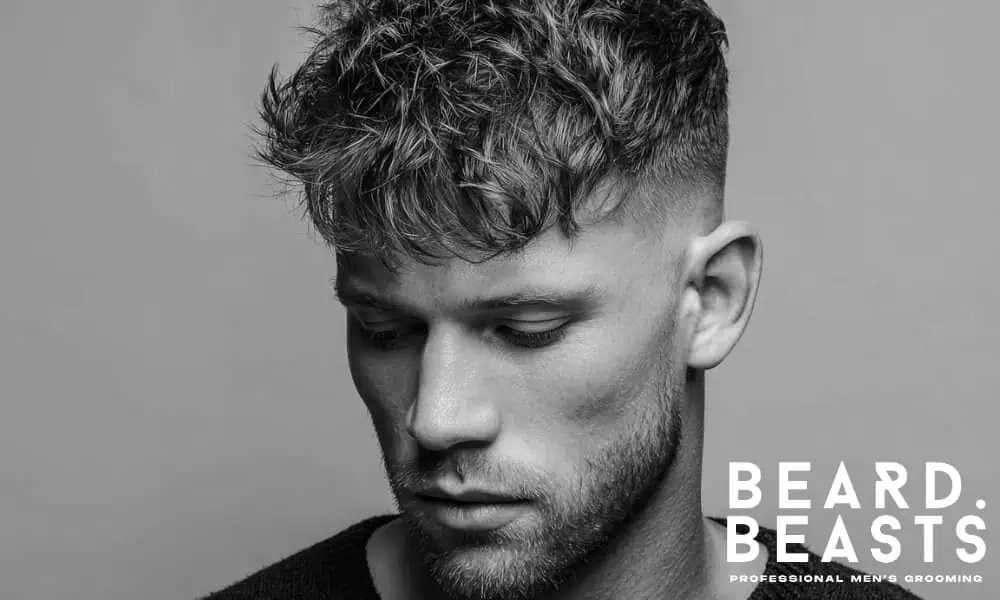
Textured fringe haircuts are dominating barbershops because they hit that rare balance between structure and flow. You get forward length without stiffness, shape without that helmet look. The layered fringe adds grit and separation, while a fade or taper underneath keeps the whole cut sharp instead of messy.
But not every version works on every head. Length changes the attitude. The side profile changes the impact. Density changes everything. In this guide, we break down the strongest styles for 2026, how to choose one that actually suits you, and how to style it so it looks intentional, not accidental.

In this article
What Is a Textured Fringe Haircut?
A textured fringe haircut keeps length at the front and lets it fall forward, but it’s cut in broken layers instead of one blunt line. Barbers use point cutting to remove bulk and create separation, so the fringe moves naturally instead of sitting flat. The sides are usually faded, tapered, or undercut to keep the outline tight and the focus on the front.
It’s different from a French crop, which is heavier and more uniform, and a Caesar cut, which is shorter with a straighter edge. A textured fringe is lighter, layered, and built for movement.
Best suited to straight, wavy, or lightly curly hair with decent density.
Quick Style Picks: Which Textured Fringe Is Right for You?
If you want fast direction, start here:
-
Best for Straight Hair →
Classic Textured Fringe -
Best for Thick Hair →
High Fade Textured Fringe -
Best for Low Maintenance →
Low Taper Textured Fringe -
Best for Curls →
Curly Fringe with Fade -
Best Bold Look →
Disconnected Undercut Fringe
Best Textured Fringe Haircuts for Men (2026)
Not all textured fringe haircuts carry the same weight. Some stay subtle and controlled. Others lean sharp, high contrast, and built to stand out. The difference comes down to how tight the sides are cut and how much separation you build into the fringe.
We’ve grouped them properly. Clear structure. No flat list.
Low Contrast & Tapered Textured Fringe Haircuts
These styles blend gradually from the top into the sides. The fringe still has separation and flow, but the overall shape stays balanced. If you want texture without looking like you’re chasing trends, this is your starting point.
Classic Textured Fringe

This is the foundation. Medium length on top, layered through the front with point cutting, and scissor-cut or lightly tapered sides. The result feels natural but structured, giving you shape without stiffness. It works particularly well on straight or slightly wavy hair with decent density.
Low Fade Textured Fringe

A low fade tightens the lower sides while keeping the transition soft and controlled. The fringe carries most of the visual weight, but the cut doesn’t feel aggressive or over-styled. It suits most face shapes and works well if you want something sharp without going extreme.
Textured Fringe Low Taper

The low taper gradually removes bulk around the ears and neckline without dropping to skin. It keeps the haircut subtle and office-safe while allowing the fringe to hold its layered character. You get grit at the front and restraint at the sides.
Mid Taper Fade Textured Fringe

The mid taper sits slightly higher, creating more noticeable separation between top and sides. The shape looks cleaner and more defined, especially from the side profile. This version suits thicker hair that can handle layering without losing structure.
Side-Swept Textured Fringe

Here, the fringe is layered but directed slightly off-center rather than falling straight down. The shift adds shape and movement without making the cut look dramatic. It’s ideal if your hair naturally pushes one way and you want to work with it instead of fighting it.
High Contrast & Skin Fade Textured Fringe Styles
This is where textured fringe haircuts sharpen up. The sides are taken tight, often down to skin, which makes the fringe look heavier and more defined by comparison. The stronger the separation, the more impact the cut carries.
These styles suit men with solid density and a willingness to maintain clean edges. Skin fades grow out fast. Ignore that, and the whole shape softens.
High Fade Textured Fringe

The high fade climbs quickly from the temples, stripping bulk from the sides and pushing all attention toward the front. The layered fringe appears thicker because there’s nothing competing with it. This works best on straight or wavy hair with real density.
Skin Fade with Textured Fringe

Taken right down to skin, this version is crisp and unforgiving. The fringe must be cut properly with visible layering, otherwise it sits like a clump. It suits square and oval faces particularly well, but it demands regular clean-ups to stay sharp.
Cropped Textured Fringe with a Skin Fade

Here the fringe is slightly shorter but still broken through the ends. The skin fade underneath tightens the outline and makes the top look more structured. It’s a strong choice if you want texture without long forward length.
Drop Fade with Textured Fringe

The fade dips behind the ear, following the natural curve of the skull instead of running straight across. That subtle contour adds personality without going full undercut. From the front it looks clean. From the side it feels intentional.
Burst Fade Textured Fringe

The burst fade wraps tightly around the ear and leaves more weight through the back. Combined with a choppy forward fringe, it creates a bold, modern shape. If your style leans conservative, this might feel too loud. If you like sharp lines, it works.
Curly Fringe with High Skin Fade

Natural curls at the front create built-in texture, and the high skin fade underneath amplifies that contrast. The tighter the curl pattern, the stronger the result. Loose or inconsistent curls can look unruly unless cut with precision.
Messy Textured Fringe with High Skin Fade

This version leans into separation and visible grit. The fringe is layered more aggressively, giving it a broken, almost rugged finish. It looks intentional when styled properly. Skip the trims, and it turns chaotic fast.
Undercut & Disconnected Textured Fringe Styles
Now we move into sharper territory. A disconnect means the top and sides don’t blend gradually. There’s a clear break between them. That separation makes the fringe look heavier, thicker, and more deliberate.
These styles suit men who want presence. If you prefer soft transitions and subtle blends, this isn’t your lane.
Undercut Textured Fringe

The classic undercut keeps the sides clipped short, often one guard length, with no fade into the top. The fringe sits forward with layered separation while the sides stay tight and uniform. The lack of blending makes the top stand out immediately, which works best on thick straight or wavy hair.
Disconnected Undercut with Textured Fringe

Here the break between top and sides is even more pronounced. The top is left longer, and the contrast is intentional rather than subtle. It creates a strong shape. If your hair density is weak or thinning at the front, this cut will expose it quickly.
Undercut with Curly Textured Fringe

Natural curls at the front combined with short clipped sides create serious visual separation. The curl pattern provides built-in texture, so the layering doesn’t need to be overly aggressive. It suits medium to tight curls with volume, but if your curls collapse flat, the top can feel top-heavy.
Long Textured Fringe with Disconnected Undercut

This version pushes length forward while keeping the sides sharply detached. The fringe drops lower over the forehead, adding drama and personality. It’s expressive and slightly rebellious. In strict corporate settings it may feel too bold, but in creative environments it carries weight.
Curly & Wavy Textured Fringe Styles
If you’ve got natural movement, textured fringe haircuts become easier and stronger at the same time. Waves and curls create built-in separation, so the layering enhances what’s already there instead of forcing shape into straight strands.
The key is respecting your pattern. Work with it, and the cut looks effortless. Fight it, and it pushes back.
Wavy Textured Fringe

Loose waves at the front create natural flow without looking overworked. Light layering removes bulk so the fringe doesn’t sit heavy or collapse flat. It’s ideal for medium-density hair with a natural bend and suits men who want relaxed structure without too much drama.
Curly Textured Fringe

Here, the curl pattern does most of the heavy lifting. The fringe sits forward with controlled volume while the sides are shaped to avoid mushroom bulk. It works best on defined curls with spring and consistency. If your curls are frizzy or uneven, precision cutting becomes essential.
Curly Textured Fringe with a Fade

Adding a fade tightens the shape and sharpens the outline. The curls on top appear fuller because the sides are stripped back, creating cleaner separation. This version balances texture with structure and works well if you want contrast without going full undercut.
Wavy Fringe with Skin Fade

A skin fade underneath increases impact and makes the waves look thicker and more pronounced. It adds bite to what might otherwise feel soft. This leans modern and youthful, so if you prefer subtle, you may want a lower fade instead.
Long & Expressive Fringe Variations
Length changes everything. Push the fringe longer and it stops being a detail. It becomes the feature. These versions lean more expressive, more visible, and slightly more demanding.
More length means more flow. It also means more responsibility. If you won’t maintain it, don’t grow it.
Long Textured Fringe

This keeps noticeable length at the front, often dropping toward the brows. Heavy point cutting is essential to remove bulk so it doesn’t hang like a damp curtain. It works best on thick straight or wavy hair that can carry weight without collapsing. Fine hair can turn stringy fast at this length.
Textured Fringe with a Mullet

Here the fringe stays layered and forward while the back retains extra length. The contrast between tight sides and a longer rear adds grit and attitude. It’s bold and slightly rebellious. If you’re unsure about it, that’s your answer.
Layered Shaggy Fringe

This version leans into separation and feathered layering through the front. The fringe blends more gradually into the top, creating a looser, almost rock-inspired shape. It suits wavy hair with natural volume. Too much density without proper thinning, and it turns into a heavy mop.
Short & Structured Fringe Variations
Not every textured fringe needs length swinging over your eyebrows. Some men want control. Tight edges. A shape that holds without constant adjustment.
This cluster keeps the fringe layered, but compact. More discipline. Less drama.
Short Textured Fringe

The fringe sits higher on the forehead with shorter, choppy layers through the front. You still get separation, but without hair dropping into your eyes. It’s practical and clean, especially for active lifestyles or hotter climates.
Caesar Fringe

This modern take keeps the fringe short and forward but softens the traditional blunt edge with light texturing. It feels sharper and more contemporary than the classic Roman version. It works best on thick hair that can hold structure without looking sparse.
Textured Cropped Fringe with Short Beard

Here the fringe stays compact and layered, while the short beard adds weight and balance below. The contrast between short top and structured facial hair creates a strong frame around the face. Just keep the beard sharp. A scruffy beard ruins the precision.
Mid Fade Textured Fringe

The mid fade tightens the sides without going extreme. It creates a cleaner side profile while letting the fringe carry texture at the front. This is a strong middle ground if you want definition without committing to a full skin fade routine.
Spiky Layered Fringe

The fringe is cut short but layered aggressively to allow upward lift and separation. It has grit instead of flatness, giving the cut a sharper edge. It works best on thick, straight hair that can hold structure without collapsing.
Across all these textured fringe haircuts, the pattern is simple. More separation equals more presence. More length equals more expression. More structure equals more control.
The smart move isn’t picking the trendiest version. It’s choosing the one your density, routine, and confidence level can actually handle.
Now let’s narrow it down properly.
How to Choose the Right Textured Fringe for Your Face Shape
A textured fringe can sharpen your features or throw your proportions off completely. The key is balance. You’re not just cutting hair. You’re adjusting the frame around your face.
Round Face
You need angles to break up softness. A mid or high fade with a slightly lifted or side-directed fringe adds structure and stops your face from looking wider. Avoid heavy, flat fringes that sit low and broad across the forehead. That only exaggerates roundness.
Square Face
You already have strong bone structure, so you don’t need extreme separation at the sides. A low fade or taper with a layered fringe softens the forehead without killing your edge. Keep the texture natural. Too much height can push the cut into aggressive territory.
Oval Face
This is the most versatile shape. You can pull off low contrast, skin fades, longer fringes, or tighter structured versions without fighting your proportions. Just avoid going extreme at both ends. Balance always looks stronger than shock value.
Oblong Face
Height works against you here. High fades combined with tall, spiky texture can stretch your face further. Keep some weight at the sides and let the fringe sit forward rather than up. A lower fade with controlled layering brings things back into proportion.
Face shape isn’t about rules. It’s about correction. The right textured fringe should sharpen what you’ve got and downplay what you don’t like.
Get that balance right, and the cut works for you instead of against you.
How to Style a Textured Fringe (Step-by-Step)
A textured fringe looks effortless. It isn’t. The separation and lift come from how you dry it and how you handle product. Skip the fundamentals and it collapses into flat fuzz.
Here’s how to do it properly.
1. Start With Damp Hair
Towel-dry until your hair is damp, not dripping. Too wet and product won’t grip. Too dry and you lose control before you even begin.
You want workable texture. Not soaked strands.
2. Blow Dry With Direction
Blow dry the fringe forward using your fingers, not a brush. Use your hand to guide the airflow and lift slightly at the roots if you want height. For a more relaxed finish, push it forward and slightly down.
The dryer sets the foundation. If you rush this step, the shape won’t hold.
3. Apply the Right Product
Use matte clay for stronger hold and visible grit. Go with texture paste if you want flexible separation that can be reworked during the day. Add sea salt spray before drying if your hair lacks natural lift.
Start small. Warm it between your palms. Work it through from back to front. You can always add more. You can’t un-grease it.
4. Finish With Finger Separation
Pinch small sections to create broken texture and definition. Don’t comb it into submission. You’re shaping separation, not flattening it.
A textured fringe isn’t about perfection. It’s about controlled flow.
Master the direction and the finish, and the cut does the rest.
Best Hair Products for Textured Fringe Haircuts
Your cut sets the shape. Your product makes it work in real life. Pick wrong and your fringe flops or turns into stiff fuzz by lunchtime.
Here’s what actually delivers results.
Matte Clay (For Control)
Matte clay gives grip, dry texture, and hold without shine. It thickens the hair visually and adds grit that works especially well on layered fringes.
Best for short to medium textured fringes. If your hair is fine, clay adds body. If it’s thick, it keeps things disciplined.
Texture Paste (For Flexibility)
Paste gives medium hold with movement. It creates separation without turning your fringe into a stiff helmet. You can rework it during the day without losing the shape.
Ideal for side-swept or slightly longer styles where you want flow with structure.
Sea Salt Spray (For Lift)
Sea salt spray roughs up the strands and builds raw texture before you dry. It’s perfect if your hair sits flat or lifeless out of the shower.
Not enough on its own for hold, but strong as a base layer ahead of clay or paste.
Lightweight Cream (For Longer Fringe)
Longer textured fringes need control without heaviness. A lightweight styling cream smooths without killing movement and helps define waves or light curls.
Best for wavy or slightly curly hair that needs definition without crunch.
Use the product that matches your fringe length and density—not the one your mate swears by.
Textured Fringe vs French Crop vs Caesar
These three get lumped together constantly. They all push hair forward. They all look modern. But the structure underneath is different.
The difference comes down to length, edge, and how much separation you want showing.
| Feature | Textured Fringe | French Crop | Caesar Cut |
|---|---|---|---|
| Length on Top | Short to medium, fringe-focused | Short to medium, more even throughout | Short and compact |
| Fringe Style | Layered, broken, natural fall | Blunt or lightly textured | Short, straight, horizontal line |
| Texture Level | High separation and flow | Moderate texture, cleaner shape | Minimal texture |
| Maintenance | Medium, requires styling | Low to medium | Low |
| Best For | Modern, relaxed structure | Clean, balanced look | Tight, disciplined finish |
A French crop feels sharper and more uniform. The fringe sits forward but holds a clearer edge.
A Caesar is shorter and more rigid. The line across the forehead is deliberate and compact.
A textured fringe is looser and layered. It relies on broken texture instead of a blunt wall. It looks natural, but it’s built with intent.
Choose based on how much structure you want visible.
Is a Textured Fringe Right for You?
A textured fringe isn’t automatic. It works when your hair type, routine, and expectations line up.
It suits straight hair, natural waves, and light curls with enough density to handle layering. If your hair is very fine or thinning heavily at the front, pushing length forward can expose patchiness instead of disguising it. In that case, shorter and tighter usually works better.
Your lifestyle matters too. This cut has shape and flow. It isn’t military-tight or maintenance-free. If you want something modern that still fits daily life, it’s a strong option. If you don’t want to style at all, look elsewhere.
Maintenance is the final piece. High fades and sharp tapers need regular clean-ups to stay crisp. Let them grow too long and the silhouette softens quickly.
Get the density, routine, and upkeep right, and a textured fringe works with you instead of against you.
Textured Fringe Haircuts: FAQs
What haircut should I get if I want a textured fringe?
Ask for a layered fringe that falls forward, cut with point technique so the ends are broken rather than blunt. Pair it with a fade, taper, or undercut depending on how bold you want the sides. If you’re unsure, start with a low taper. You can always tighten it up next time.
What should I tell my barber for a textured fringe?
Be clear and specific. Tell them you want length left at the front, textured through the ends, not cut straight across. Say you want visible separation and natural fall, not a hard horizontal line. Then explain how much contrast you want on the sides.
Does a textured fringe suit everyone?
No. It works best on straight hair, waves, or light curls with solid density. If your hair is very thin or your hairline is heavily receding, a longer forward fringe can expose patchiness instead of disguising it. In those cases, shorter and tighter usually looks stronger.
Why is the textured fringe so popular?
Because it looks modern without looking overworked. It has shape and character without feeling stiff. You can wear it relaxed or sharpen it with a fade, which makes it adaptable to different styles and settings.
Is a textured fringe hard to maintain?
It’s moderate, not extreme. You’ll need light styling most mornings and regular trims to keep the outline clean. Ignore upkeep and it loses structure quickly.
Does a textured fringe work on thin hair?
It can, but it needs restraint. Too much layering removes weight and makes thin areas obvious. Keeping the fringe slightly shorter and avoiding aggressive fades helps maintain balance.
How often should I trim a textured fringe?
Every two to four weeks, depending on how tight the sides are and how fast your hair grows. Higher contrast styles need more frequent clean-ups, while softer tapers grow out more forgivingly.
What’s the difference between a textured fringe and a textured crop?
A textured crop keeps the top shorter and more even, with the fringe blending into the overall shape. A textured fringe makes the front the main feature, with more length and separation to create presence.
Beard Beasts Verdict
Textured fringe haircuts aren’t just trending. They’ve earned their place because they balance structure with personality. You get shape without stiffness. Edge without looking overworked.
But this isn’t a lazy man’s cut. The layering has to be sharp. The sides need upkeep. And the styling needs intention. Weak density, rushed trims, or sloppy product use will show fast.
If you’ve got the hair for it and you’re willing to maintain it, a textured fringe gives you modern structure with bite. Not stiff. Not dated. Just confident and current.
Choose the version that fits your face, your routine, and your attitude.
The rest is down to your barber.