

Most beard oils promise softer hair, less itch, and a better-looking beard. The problem is that once you start comparing bottles, they all begin to sound exactly the same.
That is why finding the best beard oils is not really about chasing the longest ingredient list or the fanciest branding. What matters is how the oil actually feels in your beard, whether the scent becomes annoying, how well it suits your beard type, and whether it is worth the money.
I tested the oils in this guide with those differences in mind. Some impressed me for very different reasons, and several are much better suited to certain beards than others. Here is where I would spend my money.

In this article
The 8 Best Beard Oils for Men
Eight oils made the final list, but they are here for different reasons. A rich oil can be useful on a long, rough beard and far too much on a short, fine one.
So pay attention to the category beside each product. That tells you why it earned a place here and, more importantly, whether it is likely to suit you.
1. Jack Black Beard Oil: Best Overall Beard Oil
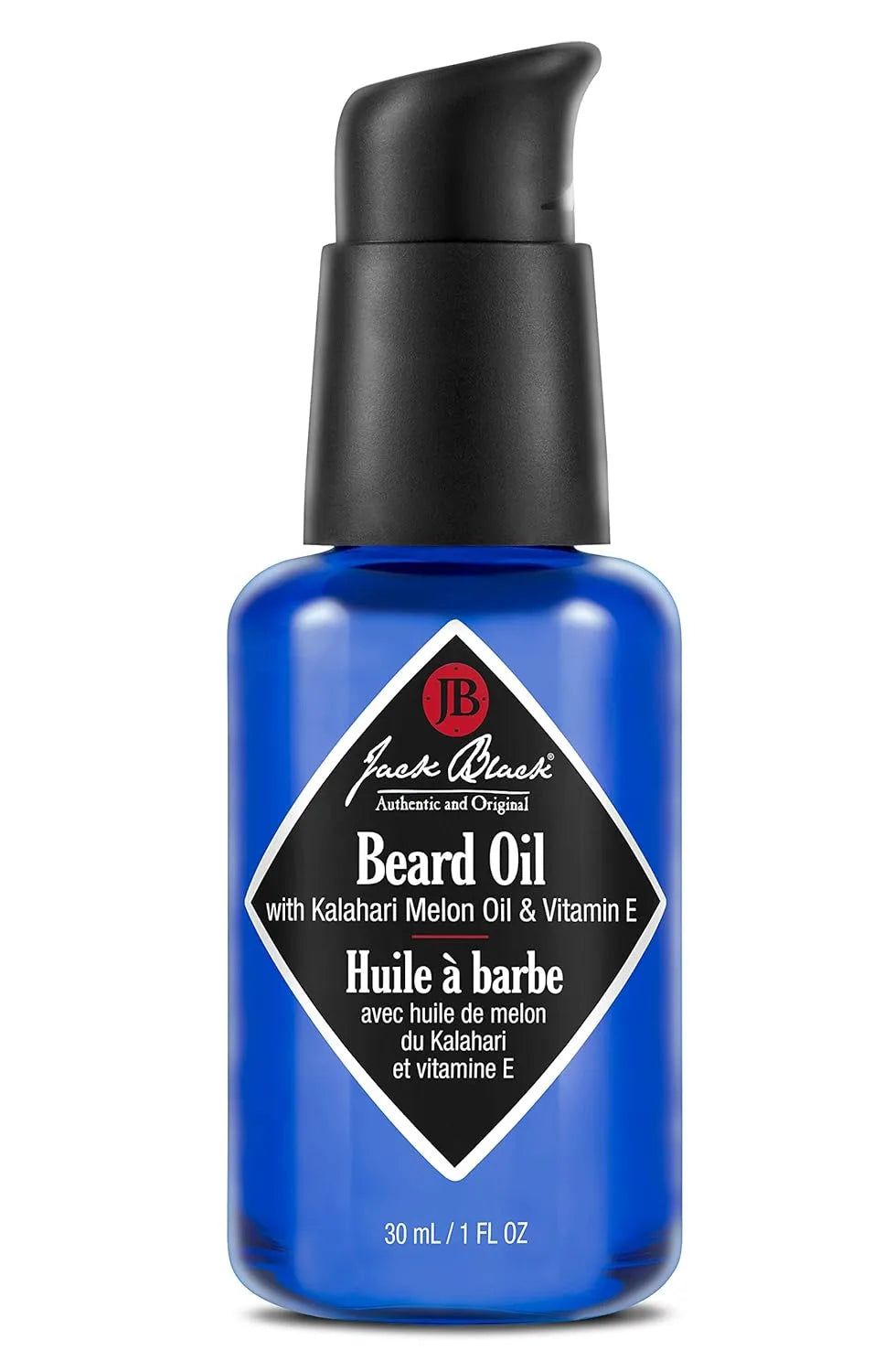
Jack Black
1 fl oz (30 ml)
Why We Like It
Lightweight without feeling underpowered
Low-key scent that doesn’t take over
Works well from shorter beards through to fuller growth
Jack Black gets my top spot because it gets most things right without going too far in any one direction.
It has a lighter feel than some of the richer oils on this list, so it works well on a shorter beard, but there is still enough conditioning there as your beard gets thicker or starts feeling dry. Kalahari melon, marula and plum oils are among the ingredients, along with vitamin E.
There is something worth pointing out, though. This is more than a simple blend of plant oils. The current formula also uses silicones. I do not see that as a problem by itself, but if you specifically want a straightforward, oil-only type of formula, Honest Amish is a better fit.
The other downside is price. You only get a 1 oz bottle, so if you have a long beard and use more than a few drops every morning, it can get expensive pretty quickly.
For most men, though, Jack Black is where I would start. It is fairly light, the scent is low-key, and there are very few beard types I would immediately steer away from it.
2. Honest Amish Classic Beard Oil: Best Value Beard Oil

Honest Amish
2 fl oz (60 ml)
Why We Like It
2 oz bottle gives you more for your money
Packed with avocado, pumpkin seed, argan and jojoba oils
Strong fit for fuller beards that use more product
If you want more beard oil for your money, Honest Amish is hard to ignore.
You get a 2 oz bottle, which is useful if you have a fuller beard and use oil regularly. The formula is packed with carrier oils too, including avocado, pumpkin seed, argan, jojoba and several others.
This is a very different product from Jack Black. Honest Amish feels much more old-school. There are no fancy claims needed. It is basically a big blend of oils made to soften the beard and help with dryness.
The scent is the part that could put you off. It has a sweet, woody, earthy smell from the essential oils, and you will notice it. If you want something with barely any scent, Marlowe is the better direction.
But if you have a long beard, want a solid oil blend and would rather avoid premium prices for tiny bottles, Honest Amish is hard to beat for value.
3. Bevel Beard Oil: Best for Curly or Coarse Beards

Bevel
1 fl oz (30 ml)
Why We Like It
Lightweight feel without loading down coarse hair
Blend includes grapeseed, jojoba, macadamia, avocado and argan oils
Good fit for curly or coarse beards that get greasy with richer oils
Coarse beard hair does not automatically mean you need the thickest oil you can find.
That is one reason I like Bevel for curly or coarse beards. The brand builds a lot of its grooming range around coarse and textured hair, and this oil uses grapeseed, jojoba, macadamia, avocado and argan oils without turning into something really heavy.
If your beard feels rough but gets greasy easily with richer products, this is the kind of balance worth looking for. You still get conditioning, but you are not drowning the beard in oil just because the hair is coarse.
Bevel does contain fragrance, which matters if scented grooming products tend to bother your skin. In that case, Marlowe is the better option from this list.
For coarse, curly or coily facial hair where you want softness without too much weight, Bevel is one of the better picks here.
4. Baxter of California Beard Grooming Oil: Best for Long Beards

Baxter of California
1 fl oz (30 ml)
Why We Like It
Richer feel works well through longer beard hair
Uses avocado, apricot kernel, olive oil and squalane
Good choice when the ends of a longer beard feel rough or dry
Long beards need a bit more attention because you are dealing with more than the skin underneath.
The hair further down the beard can start feeling rougher, especially around the ends, so you need something that spreads well through the length without making the whole beard greasy.
Baxter uses avocado oil, apricot kernel oil, olive oil and squalane. In use, it feels richer than some of the lighter oils here, which is why I prefer it once the beard has some real length to it.
The downside is that it is not cheap, and long beards use more product. Honest Amish will cost you less over time. Baxter is the better fit if you are happy paying more for the formula and feel.
It also has a sandalwood, jasmine and cedarwood scent. That works best if you actually enjoy a noticeable fragrance in your beard rather than wanting the product to fade into the background.
5. Marlowe No. 143 Beard Oil: Best Fragrance-Free Beard Oil

Marlowe
1.7 fl oz (50 ml)
Why We Like It
Fragrance-free formula that stays out of the way
Simple four-oil blend with no added scent
Good option if scented grooming products tend to bother your skin
Marlowe is the easiest recommendation on this list if you want your beard oil to stay completely out of the fragrance conversation.
No. 143 is fragrance-free and keeps the formula pretty simple with safflower, sunflower, corn and soybean oils.
That simplicity is the point.
If scented grooming products tend to bother your skin, or you just hate having a fragrance right under your nose, removing added fragrance gives Marlowe a clear reason to be here.
For a really dry, thick beard, I would reach for something richer. Scotch Porter or SheaMoisture gives you more to work with when heavier conditioning is the priority.
But if fragrance is the thing you want to avoid, Marlowe is the easy choice.
6. Cremo Palo Santo Beard Oil: Best Smelling Beard Oil on a Budget

Cremo
1 fl oz (30 ml)
Why We Like It
Woody Palo Santo scent with cardamom
Affordable compared with many premium beard oils
Uses sunflower, avocado, jojoba, argan and coconut oils
“Best smelling” is always going to be personal, but Cremo Palo Santo is one of the few beard oils here where the scent is a real reason to buy it.
It has a woody smell with cardamom and Palo Santo, and it costs a lot less than some of the premium options.
Underneath the fragrance, the formula is fairly straightforward. You get sunflower, avocado, jojoba, argan and coconut oils, so you are still getting a proper beard oil rather than paying just for the smell.
This is one I would choose because you actually like the scent, not despite it. Woody fragrances are the whole appeal here, so if that profile does nothing for you, another oil will give you a better reason to buy it.
But if that Palo Santo-style fragrance appeals to you and you want something affordable, Cremo gives you a lot for the money.
7. Scotch Porter Beard Oil: Best for Dry, Itchy Beards

Scotch Porter
1.7 fl oz (50 ml)
Why We Like It
Strong pick when dryness and itch are the main problems
Uses sunflower, jojoba and avocado oils
Works well when the skin under your beard feels dry and tight
If dryness and itch are the main reasons you are looking for beard oil, Scotch Porter is the first one I would look at.
The formula uses sunflower, jojoba and avocado oils, and the product is aimed heavily at dry beard hair and dry skin underneath.
This is where beard oil can help. If the skin under your beard simply feels dry and tight, working some oil down to it may make the area feel more comfortable.
Persistent beard itch needs a little more thought, though. If the skin is red, very flaky or still itchy after you have been looking after the dryness properly, the oil may not be the real issue. At that point, look at your washing routine, the products you are using, and whether something else is irritating the skin.
Scotch Porter is scented too, so Marlowe is the better fit from this list if added fragrance tends to bother you.
For plain old dryness, though, Scotch Porter is one of the stronger picks here.
8. SheaMoisture Beard Conditioning Oil: Best for Thick, Full Beards

SheaMoisture
3.2 fl oz (95 ml)
Why We Like It
Richer formula works well on thick, full beards
Maracuja oil and shea butter add extra conditioning
Good step up when lighter beard oils are not doing enough
SheaMoisture is the strongest fit here if you have a thick, full beard that still feels rough or dry.
The formula contains a long list of oils, including grapeseed, sunflower, olive, castor, maracuja, argan, coconut, almond and jojoba, along with shea butter.
That is probably more than a short beard needs. If you only have a few weeks of growth, a lighter oil is the better starting point.
But if your beard is thick, full and still feels rough after using lighter oils, a richer formula like this becomes useful.
The important thing is separating thickness from dryness. You can have plenty of facial hair and still have a beard that feels perfectly soft. A bigger beard only needs a heavier product when the hair itself is actually asking for more conditioning.
For a thick beard that feels dry and rough, SheaMoisture is my pick from this list.
How We Chose These Beard Oils
I wanted each oil on this list to have a clear reason for being here. Calling every product “premium,” “lightweight” and “great for all beard types” does not help anyone choose.
I tested all eight beard oils in this guide and checked the current ingredient lists, fragrance, bottle size, price, and what each product is actually aimed at.
Each oil was judged on the job it is meant to do. A lighter formula can be a good thing on a short beard and completely underwhelming on a long, rough one. A strong scent might be a selling point for one man and the exact reason another would stop using it. The real question was, “Who is this actually good for?”
I also looked for genuine separation between the products. If two oils were doing basically the same job, only one needed a place. Price mattered too. A good formula can still be poor value when a small bottle disappears quickly on a bigger beard.
Every oil needed a clear reason to be here. If I could not explain who should buy it, why, and what might put someone off, it did not need a spot.
How to Choose a Beard Oil
Choosing a beard oil gets much easier once you stop looking for the one that is supposedly “best” and start looking at what your beard actually needs.
A short, fairly soft beard does not need the same thing as a long, coarse one. Your skin matters too. If it already gets oily easily, piling on a rich beard oil may just leave you greasy. If it feels dry and tight, something a little more conditioning may be a better fit.
The trick is knowing what problem you are actually trying to fix before you buy another bottle.
Match the Oil to Your Beard Texture
If your beard is fairly fine or already soft, I would start with a lighter oil. You want enough to take away that dry feeling and make the hair easier to manage without weighing everything down.
Too much of a heavy oil can also make finer beard hairs clump together. If your beard is not particularly dense, that can expose more skin and make it look thinner rather than better. Before blaming the product completely, try using less. A decent beard oil can still leave your beard looking greasy or weighed down if you use more than it needs.
Coarse or curly beard hair can usually handle more conditioning, but heavier is not automatically better. If you keep moving to richer products and the beard just gets shinier without feeling much softer, more oil is probably not the answer.
For really rough facial hair, look at the whole formula rather than buying something because one ingredient sounds impressive on the front. Argan, jojoba or avocado oil can all be useful, but the overall blend matters more than one ingredient being pushed as the reason to buy it.
Scented vs Fragrance-Free Beard Oil
Scent matters more with beard oil than a lot of men expect because the product is right under your nose.
If you genuinely like scented grooming products, that can be a good thing. In that case, the fragrance is part of what you are buying rather than something you merely tolerate.
But if you already wear cologne, think twice before choosing a strong beard oil as well. Two fragrances you like separately can still smell bad together.
If fragrance tends to bother your skin, check for the words “fragrance-free” specifically. A product described as natural can still contain essential oils or other scented ingredients.
Fragrance-free is not a guarantee that your skin will like the oil, either. It simply removes one common variable.
My rule is simple: if scent is part of the reason you want the product, choose one you genuinely like. If it is not, I would rather the beard oil stay out of the way.
Beard Oil for Short vs Long Beards
With a short beard, most of the product ends up close to the skin. There is not much hair to work through, so a lighter oil is usually where I would start.
Once the beard gets longer, the job changes. You have more hair to condition, and the lower lengths and ends can start feeling rough even when the hair closer to your face still feels fine.
That is where a richer oil can be useful. But using more product is not automatically the answer. If the outside of your beard looks shiny while the hair underneath still feels rough, you may simply not be spreading the oil through properly.
Use beard length as one clue, but let how the beard actually feels make the final call. A long beard that already feels soft does not need a lot of oil, and a short beard can still be very coarse.
How your beard actually feels matters more than how long it is.
Does Beard Oil Help Beard Growth?
Not really, at least not in the way a lot of “growth oil” marketing makes it sound.
Beard oil can make the facial hair you already have softer, less dry and easier to manage. Keeping dry, brittle hair conditioned may also help reduce breakage at the ends, which can help a longer beard keep its length and look more even.
What beard oil cannot do is create new follicles or turn an area that naturally grows very little facial hair into dense growth.
That distinction matters because looking fuller and growing fuller are not the same thing. A conditioned beard can look better because the hairs are softer, less rough and easier to control. That does not mean you have suddenly grown more of them.
I would buy beard oil for dryness, rough facial hair, mild itch caused by dry skin and general manageability. Claims about dramatic beard growth would not influence my choice.
If your main goal is a fuller beard, your genetics, age and how your follicles respond to hormones matter far more than any cosmetic oil. Beard oil can help you look after the beard you already have. It cannot turn naturally sparse growth into a dense beard.
Beard Oil FAQs
Is Beard Oil Worth It?
If your beard feels dry, rough or hard to manage, yes, beard oil is worth using.
A beard alone is not a reason to add another product. If your facial hair already feels soft and your skin is comfortable, your current routine may already be doing enough.
Beard oil earns its place when it fixes something you actually notice. If your beard still feels rough because you are washing it too harshly, or the skin underneath stays red, flaky or itchy, adding more oil may not solve the real problem.
Should Beard Oil Go on Your Beard or Skin?
Both.
Work some through with your fingers so it reaches the skin underneath, then spread the rest through the hair and any drier ends. Simply smoothing oil over the outside misses a big part of what you are trying to do.
You do not need to soak the skin. If the beard looks wet or greasy afterward, you have probably used more than you need.
How Often Should You Use Beard Oil?
There is no schedule that works for every beard.
Some men do well using it every day. Others need it less often, especially with shorter facial hair or naturally oilier skin.
If your beard still feels greasy well after application, use less or leave more time between applications. If it regularly feels dry or rough between uses, you may need a little more product or to use it more often. Beard length, texture, climate and the formula itself all make a difference.
Why Does Beard Oil Make My Beard Look Greasy?
Usually because you are using too much, the formula is too rich, or you are combining it with more conditioning and styling product than your beard needs.
Start with less. Then look at what else is going into your beard. Oil on top of balm, leave-in conditioner or another rich product can quickly become too much, even when each product seems fine on its own.
If you are using the oil by itself, applying a small amount and it still leaves the beard greasy, I would switch to a lighter formula.
Beard Oil vs Beard Balm: Which Should You Use?
Choose beard oil when dryness and conditioning are the main problems.
Beard balm is the better option when you also want some control. Many balms are thicker and can help keep longer or stray hairs in place.
You do not automatically need both. If your beard feels rough or dry, start with oil. If it already feels soft and your main problem is keeping it tidy, balm may be the better buy.
Final Verdict: What Are the Best Beard Oils for Men?
If I had to choose one of the best beard oils for most men, I would go with Jack Black Beard Oil.
It is light enough for a shorter beard, but it still gives you enough conditioning as the beard gets thicker or starts feeling rough. The scent is fairly low-key too, so it is less likely to get annoying or clash with whatever else you are wearing.
Jack Black wins on balance rather than being the cheapest, richest or fragrance-free option. Honest Amish Classic Beard Oil gives you better value if you have a bigger beard and use a lot of oil. Marlowe No. 143 is my pick if you want to avoid added fragrance, while I would lean toward SheaMoisture if your beard is particularly thick, rough and dry.
If you do not have one specific problem pushing you toward another option, Jack Black is the easiest recommendation. Of the best beard oils I tested, it gives you the best mix of conditioning, a lighter feel and a scent that does not take over, which is why it takes my top spot.